


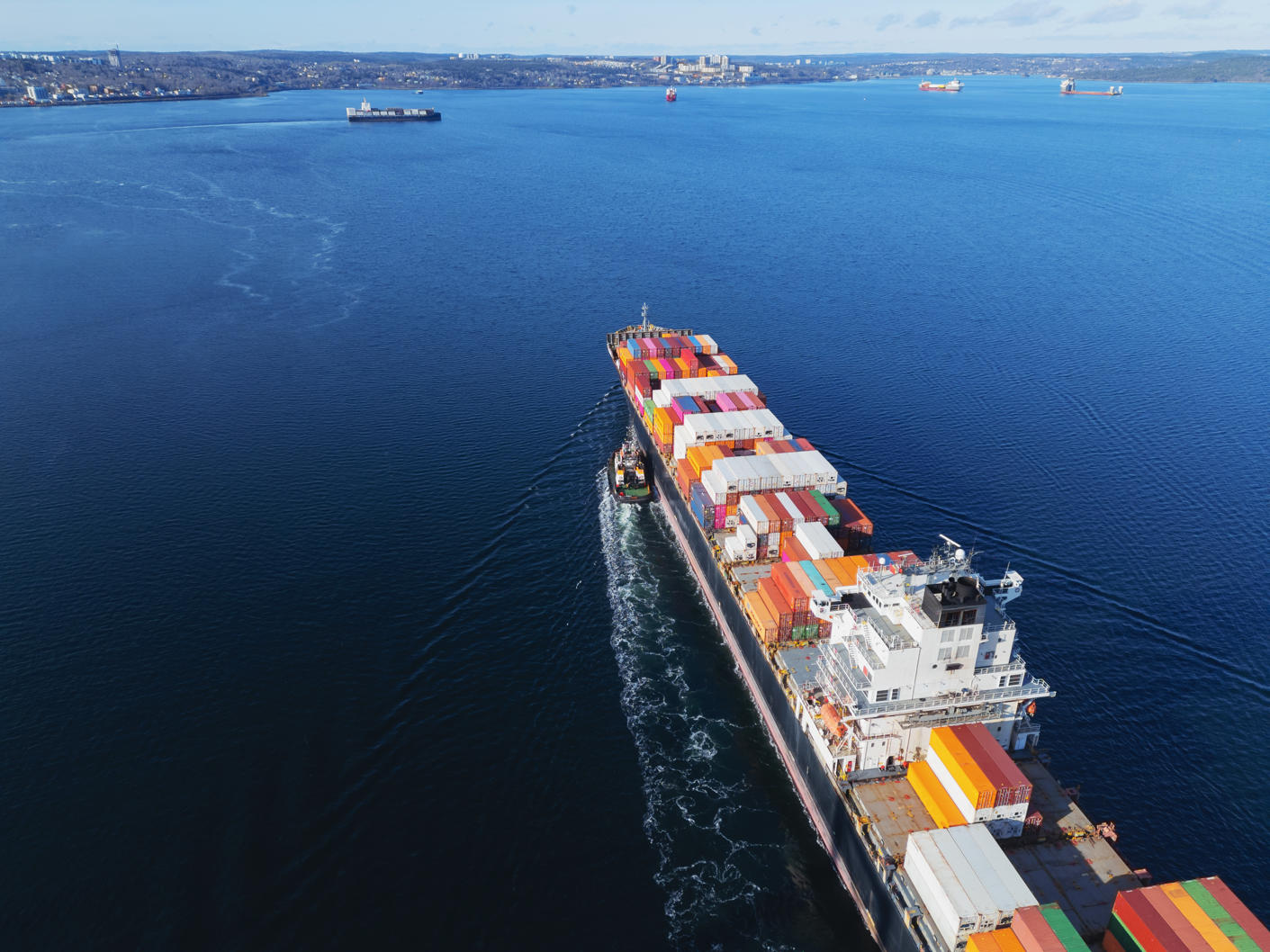
INTERNATIONAL FREIGHT: MUCH MORE THAN TRANSPORTATION
International freight is what makes foreign trade possible. It connects markets, enables imports and exports, and allows goods to move between countries in a structured, secure, and regulated way.
But treating freight as transportation alone oversimplifies a process that, in practice, involves technical, operational, and regulatory decisions that directly impact cost, lead time, risk level, and the predictability of an international operation.
WHAT IS REALLY BEHIND INTERNATIONAL FREIGHT
International freight is a set of activities that must work in an integrated way throughout the international logistics chain. Every decision made along the process influences the performance of the operation as a whole.
Among the main elements involved are:
- contracting international transportation
- selecting the most suitable transport mode
- defining routes and transit times
- managing costs at each stage
- meeting documentary requirements
- interfacing with customs and consenting authorities
- clearly defining responsibilities between the parties
When these points are not handled in a technical and coordinated way, freight stops being a foreign trade enabler and starts generating delays, additional costs, and operational risks.
THE ROLE OF THE FREIGHT FORWARDER IN INTERNATIONAL FREIGHT CONTRACTING
In foreign trade, international freight contracting is not an isolated step. It involves decisions that directly impact the entire logistics and customs operation.
According to Brazil's legal and regulatory definition, the freight forwarder acts on behalf of the importer or exporter in contracting goods transportation, consolidating and deconsolidating cargo, and providing related services.
In practice, this means the freight forwarder:
- evaluates cargo and operation characteristics
- defines the most suitable mode or combination of modes
- negotiates and contracts freight with carriers
- organizes cargo consolidations and deconsolidations
- coordinates shipment and transit timelines
- manages essential operation documents
- acts at the interface with customs and foreign trade systems
- considers operational, regulatory, and logistical risks
This role positions the freight forwarder as a technical link in the international logistics chain, responsible for connecting transportation, documentation, regulation, and operational execution.
TRANSPORT MODES AND CARGO TYPES
The choice of transport mode is directly related to cargo type, lead time, cost, and the operation's risk level.
Ocean freight
It is widely used in foreign trade, especially for large volumes and long-haul operations. It offers better cost per transported unit, but requires planning and predictability regarding timing and capacity.
Air freight
Recommended for urgent cargo, high value-added goods, or time-sensitive operations. It has a higher cost and requires well-structured decisions to balance time, cost, and risk.
Road freight and multimodal operations
These are used both in regional operations and as a complement to ocean and air modes. They gain efficiency when well integrated into the international logistics chain.
THE IMPORTANCE OF CHOOSING THE RIGHT INCOTERM
Incoterms establish how responsibilities, costs, and risks are divided between buyer and seller in an international transaction. A suitable Incoterm choice provides clarity on the scope of each party's responsibility, who contracts freight, who assumes risk at each stage, and how costs are distributed throughout the operation.
When well defined and understood, Incoterms contribute to a more predictable, organized operation aligned with companies' logistics strategy.
DOCUMENTATION, CUSTOMS, AND COMPLIANCE
International freight involves managing essential documents for the movement and clearance of goods, such as bills of lading and customs declarations, as well as interaction with official foreign trade systems.
The freight forwarder acts directly at this interface, supporting compliance with Federal Revenue requirements, consenting authorities, and operational systems, reducing risks and ensuring greater operational flow.
PLANNING AND RISK MANAGEMENT IN INTERNATIONAL FREIGHT
International freight requires forward-looking visibility. Planning involves considering timelines, transport mode capacity, regulatory requirements, and global scenarios before cargo leaves origin.
Risk management is part of the freight forwarding scope and is related to operation predictability, compliance with regulations, and logistics chain security.
HOW LECEX OPERATES IN INTERNATIONAL FREIGHT
Lecex operates in international freight with a technical and structured approach, aligned with foreign trade requirements and the complexity of the international logistics chain.
Our work includes:
- support in international freight contracting
- analysis of the most suitable mode and route
- guidance in defining Incoterms
- document and timeline management
- interface with customs and foreign trade systems
- close monitoring of the operation
The result is more organized, predictable operations aligned with foreign trade regulatory requirements.